Reading time: 6–7 minutes
By the end you will have:
- a clear picture of why artificial intelligence is causing not just fear of job loss, but also an existential upheaval,
- a way to understand why this era breeds inner instability, sadness, a sense of loss.
- a safe framework, step-by-step, on how one can rebuild the sense of identity.
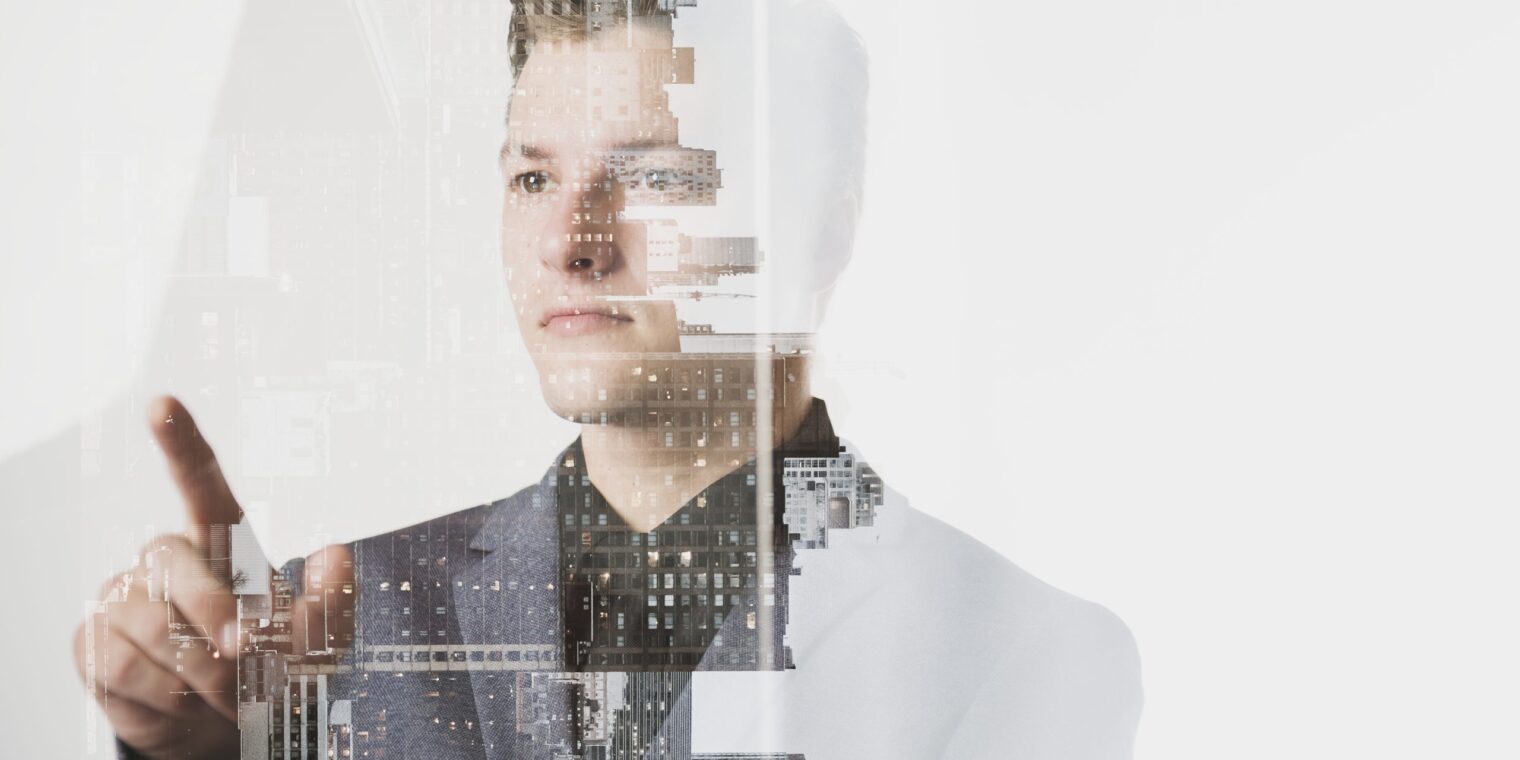
We live in an era where not only our tools are changing. The way we work, the way we belong, the way we understand who we are is profoundly shifting. This is perhaps the most significant invisible psychological burden that artificial intelligence brings: not merely that it might change the job market in which we operate, but that it forces us to confront our very identity once again.
Zygmunt Bauman, a Polish sociologist, analysed the «liquid modernity» of the contemporary era, dominated by constant change, uncertainty and instability. Everything is more temporary and less predictable. In this fluid landscape, work, roles and identities are no longer referred to as fixed points, but as points that must be built again and again. Artificial intelligence accelerates precisely this condition. According to the World Economic Forum, by 2030 there will be a major reorganisation of work: 22% of current jobs will be structurally affected, while 39% of workers' core skills are expected to change.
These anticipated changes changes in the labour market due to artificial intelligence reinforce the anxiety about the future of work and the need for adaptation.
The liquid era does not only threaten work stability; it threatens the continuity of the self
In more «solid» times, many people were able to organise their lives around certain relatively stable certainties: a profession, a social role, a path of some duration. Today this has cracked. One does not need to lose their job to feel insecure. It is enough to feel that what they knew how to do well, what defined them, what they had learned to find value in, may soon cease to exist.
Uncertainty, then, which seems merely external, becomes internal. It ceases to be simply «I don't know what will happen to the market». It becomes «I no longer know who I will be within this world». And this transition is psychologically heavy, because a human being needs more than just an income to stand. They also need continuity of the self.
Artificial intelligence does not only threaten jobs; it threatens roles, values and the sense of usefulness
Research around work shows something we constantly see in therapeutic practice: work is not just a means of survival. It is also a source of structure, recognition, meaning and identity. Therefore, psychologists studying the future of work are now speaking openly about the need to view artificial intelligence beyond a technological change, but also as an identity threat. When a system takes over parts of our role, the question that arises is not only «will I lose my position?», but also «what remains of me if what I did well is now done differently?».
The growing fear of job loss is directly linked to the loss of identity, as many people define themselves through their profession.
This does not mean that artificial intelligence will «take everything». The same data shows that new needs and new roles will be created. However, this does not negate the psychological tension of the transition. Because humans are not only stressed by destruction, but also by transformation. By the fact that we are called to move on before we have time to grieve what we are leaving behind.

Why all this feels like sorrow, grief, or even a collapse of meaning;
When our role changes abruptly, it often brings not just anxiety, but something quieter: sorrow. A sense that something is being lost, even when it has not yet been fully lost. As if you are mourning a version of yourself before it disappears for good.
In their team ReConnecT we often encounter people who do not just say «I'm afraid for my job». They express something deeper: «I'm afraid I won't be needed», «I'm afraid I'll be left out», «I'm afraid that who I am will no longer have a reason to exist». These phrases speak not only of professional insecurity, but of a crack in our sense of worth.
It is no exaggeration to say that the threat to work can become a threat to mental balance. The World Health Organization points out that mental health and work are closely linked, while depression and anxiety cost the world approximately 12 billion working days every year. At the same time, meta-analyses show that unemployment is not simply linked to psychological distress, but substantially exacerbates it.
Please note, however, here: not every distress is «depression». Sometimes it is a normal psychological reaction to an era that is changing faster than the soul can endure and assimilate. So we don't need to pathologise the upset. What helps the most is to name it correctly.
How do we mentally stand within this transition
The first step is to distinguish the value from the role. When all self-worth is tied to utility, every technological shift is experienced as a personal devaluation.
The role may change. However, our value should not depend entirely on whether our profession stays the same, whether our skillέs remain in demand, or whether the era rewards us in the same way compared to the past. When all self-worth is tied to utility, every technological shift is experienced as a personal devaluation.
The second step is to accept that we may be facing a minor or major identity grief. This means something is coming to an end. It might not necessarily be our job, but the certainty with which we recognised ourselves. And every ending, to prevent panic, requires space. Not rushed positivity. Not the familiar nonsense of «just adapt». It needs processing!
The third step is to move from the idea of a «fixed identity» to the idea of continuous coherence. That means not exclusively asking «what profession will I do?», but also «which aspects of myself do I want to continue existing, whatever form my work takes?». For example: care, judgment, creativity, the ability to connect, explain, calm, organise, support. These run deeper and are not as easily disrupted as a job title.
Reframing is not a luxury; it is a psychological necessity
The big question of the coming period will not only be «what will artificial intelligence do?», but «how will humans remain human amidst this transition?». And the answer there is not how to become faster, tougher, or more productive. That is a recipe for exhaustion.
Understanding the future of work requires not only new skills, but also reframing life and career in an ever-changing era.
As a team of therapists from ReConnecT, we would say that the goal is simpler and harder at the same time: to rediscover meaning, relationship and a direction. To invest in skills that are not merely technical but deeply human, such as judgment, empathy, ethical thinking, collaboration, and creative adaptation. To remember that technology changes the means, but cannot replace the entire human experience.
Perhaps ultimately the biggest challenge is not to protect our old identity tooth and nail, but to build a less fragile identity, one that relies not only on titles, but on values, relationships, and internal coherence. Because in a fluid era, what saves us is not keeping everything the same, but being able to change without losing ourselves.
What to take away today
The insecurity caused by artificial intelligence is not only a fear for the future of work. It is often a threat to the future of the self as well.
Η artificial intelligence and mental health are closely related, as the technological transition can trigger εσωτερική αστάθεια και πένθος ταυτότητας.
Γι’ αυτό και η απάντηση δεν μπορεί να είναι μόνο τεχνολογική ή επαγγελματική. Απαιτείται και ψυχική δουλειά, δηλαδή να πενθήσουμε ό,τι αλλάζει, να ξεχωρίσουμε την αξία μας από τη χρησιμότητά μας, και να ξαναχτίσουμε ταυτότητα με περισσότερο νόημα και λιγότερο πανικό.

Θα χαρώ πολύ να διαβάσω το μήνυμά σου… Φροντίζω να διαβάζω όλα τα μηνύματα και να απαντάω σε όσα περισσότερα μπορώ.
Το άρθρο βασίζεται στην επιστήμη της ψυχολογίας και στην κλινική εμπειρία ψυχολόγων-ψυχοθεραπευτών. Έχει ψυχοεκπαιδευτικό χαρακτήρα και δεν υποκαθιστά την ψυχοθεραπεία, την ιατρική γνωμάτευση ή την εξατομικευμένη κλινική αξιολόγηση. Αν αυτό που διαβάζεις ακουμπά έντονη ψυχική δυσφορία ή επηρεάζει σημαντικά την καθημερινή σου λειτουργικότητα, είναι σημαντικό να αναζητήσεις εξατομικευμένη επαγγελματική στήριξη.
Artificial intelligence may be used supportively in the process of researching, organising and cross-referencing contemporary literature. However, the final text, ideas, clinical judgement, language and responsibility for publication belong to us. Every article is written and edited with human thought, clinical experience and respect for the person reading it.
Γράφει: Φίλιππος Γκέκης, Ψυχολόγος Ψυχοθεραπευτής, εμπνευστής του ReConnecT μαζί με την επιστημονική ομάδα του ReConnecT.
References
Bauman, Z. (2000). Liquid modernity. Polity Press.
Bauman, Z. (2000). Ρευστή νεωτερικότητα.
Bauman, Z. (2008). Ρευστός κόσμος.
Mirbabaie, M., Brünker, F., Möllmann Frick, N. R. J., & Stieglitz, S. (2022). The rise of artificial intelligence – understanding the AI identity threat at the workplace. Electronic Markets, 32(1), 73–99.
Paul, K. I., & Moser, K. (2009). Unemployment impairs mental health: Meta-analyses. Journal of Vocational Behavior, 74(3), 264–282.
Selenko, E., Bankins, S., Shoss, M., Warburton, J., & Restubog, S. L. D. (2022). Artificial intelligence and the future of work: A functional-identity perspective. Current Directions in Psychological Science, 31(3), 272–279.
World Economic Forum. (2025). The Future of Jobs Report 2025.
World Health Organization. (2022). Mental health at work: Policy brief.